
Spring Humidity and Mold Risk in DC, MD, and VA
Every spring, the Mid-Atlantic region experiences a rapid shift from cold, dry air to warm, moisture-laden conditions. For homeowners and renters across Washington, DC, Maryland, and Virginia, that transition is more than a seasonal nuisance — it is one of the most reliable triggers for accelerated indoor mold growth. Understanding why spring humidity is so dangerous, and how to recognize early warning signs, can help you protect your home before visible mold colonies establish themselves.
Why Spring Is Prime Mold Season in the DMV
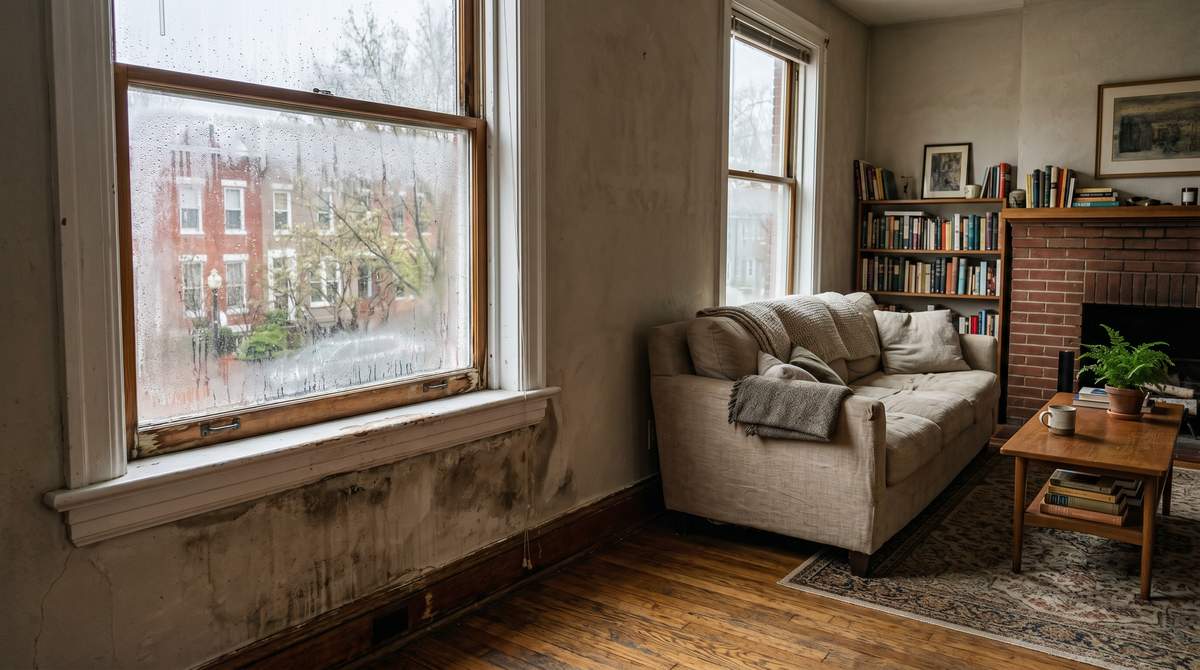
The DC Metro area sits in a humid subtropical climate zone. Spring brings average relative humidity levels that frequently exceed 60%, with overnight temperatures still cold enough to cause condensation on interior surfaces. When warm, humid outdoor air encounters cold walls, windows, and concrete floors inside a home, moisture deposits directly onto those surfaces — creating the ideal conditions for mold spores to germinate within 24 to 48 hours.
Two key factors amplify mold risk specifically in the DMV:
- Dense housing stock with older construction that lacks adequate vapor barriers or mechanical ventilation
- Frequent rain events in March and April that saturate soil, raising groundwater levels around basements and crawl spaces
- Dramatic day-to-night temperature swings that cycle condensation repeatedly on cold surfaces
- HVAC systems transitioning from heat to cooling, often creating brief periods of uncontrolled humidity indoors
According to EPA moisture control guidelines, maintaining indoor relative humidity below 60% — and ideally between 30% and 50% — is the single most effective strategy for preventing mold growth in residential and commercial spaces.
High-Risk Areas in DC, Maryland, and Virginia
Not all homes face the same level of spring mold risk. Older construction types and low-lying geographic areas tend to create the most hospitable environments for mold. In the DMV specifically, several neighborhoods and building types stand out as perennial problem spots.
In Washington, DC, many row homes and converted apartments were built before modern vapor barrier standards. Georgetown, Capitol Hill, and Adams Morgan feature significant amounts of brick construction, which is highly porous and wicks moisture from the ground and exterior rain events directly into interior wall cavities. Residents noticing musty odors after the first warm spring rain should treat that smell as a mold indicator, not merely an old-house characteristic.
In Maryland, communities near waterways — including those along the Potomac River corridor in Bethesda, Potomac, and Cabin John — experience elevated groundwater tables that stress basement waterproofing systems during spring thaw and heavy spring rain. Ellicott City, a flood-prone community, is particularly vulnerable to post-rain mold events. Our mold inspection services in Maryland cover all of these communities with rapid-response scheduling during high-risk spring months.
In Northern Virginia, tightly packed suburban neighborhoods with crawl spaces rather than full basements — common in Arlington and Fairfax — often struggle with spring condensation pooling inside those crawl spaces. Unencapsulated crawl spaces absorb ground moisture and release it into the home’s air supply, elevating whole-house humidity levels.
What to Look For in Your Home
Early spring mold often hides before it becomes visible. The following warning signs indicate that mold-friendly conditions are present, even if you cannot yet see growth:
- Musty or earthy odor in basement areas, closets, or along exterior walls
- Visible condensation on windows, particularly on cold mornings
- Water staining or efflorescence (white mineral deposits) on concrete block walls
- Peeling or bubbling paint near floor-wall junctions
- Increased allergy-like symptoms — sneezing, itchy eyes, sinus pressure — that clear up when you leave home
If you notice two or more of these signs, it is time to schedule a professional home mold inspection. A trained inspector can measure surface moisture, identify condensation hot spots, and collect air samples that reveal whether mold spore counts indoors are elevated above safe outdoor baseline levels.
The Role of Indoor Air Quality Testing in Spring
Visible mold is only part of the picture. Spring humidity also elevates airborne mold spore concentrations indoors, even in homes where no visible growth has yet developed. Professional IAQ testing services use calibrated air sampling pumps to capture a measured volume of indoor air onto laboratory cassettes, which are then analyzed by an accredited lab to identify mold species and spore counts. This gives homeowners objective data — not guesswork — about whether their indoor air meets safe thresholds.
Understanding the relationship between humidity and mold growth is essential for any spring prevention strategy. We recommend checking indoor relative humidity levels daily during April and May using a simple digital hygrometer, and running a dehumidifier in basement areas whenever readings exceed 55%.
Frequently Asked Questions
At what humidity level does mold start growing indoors?
Mold spores begin germinating when relative humidity at a surface reaches 70% or higher, which can occur on cold walls even when room-level humidity reads lower. The EPA recommends keeping indoor RH between 30% and 50% to prevent mold colonization.
How soon after spring rains should I check for mold?
If your basement or crawl space experienced any water intrusion or elevated humidity during spring rains, you should inspect surfaces within 48 to 72 hours. Mold can establish visible colonies in as little as 24 to 48 hours on wet organic materials such as drywall paper and wood framing.
Does spring mold go away on its own when it dries out?
No. Mold colonies do not die when conditions dry out — they become dormant and produce additional spores in preparation for the next humid period. Professional mold testing and targeted remediation are necessary to interrupt the growth cycle.
Is spring mold in the DMV covered by homeowners insurance?
Coverage depends heavily on your policy and the cause of moisture intrusion. Mold resulting from sudden water damage (burst pipe) is more often covered than gradual moisture accumulation. A professional mold inspection report provides the documentation insurers typically require to evaluate a claim.
Ready to protect your home before spring mold takes hold? Contact DMV Mold at (301) 379-1715 or visit our contact page to schedule a spring mold inspection across DC, MD, and VA.