
Mold in Arlington Row Homes: What Every Owner Should Know
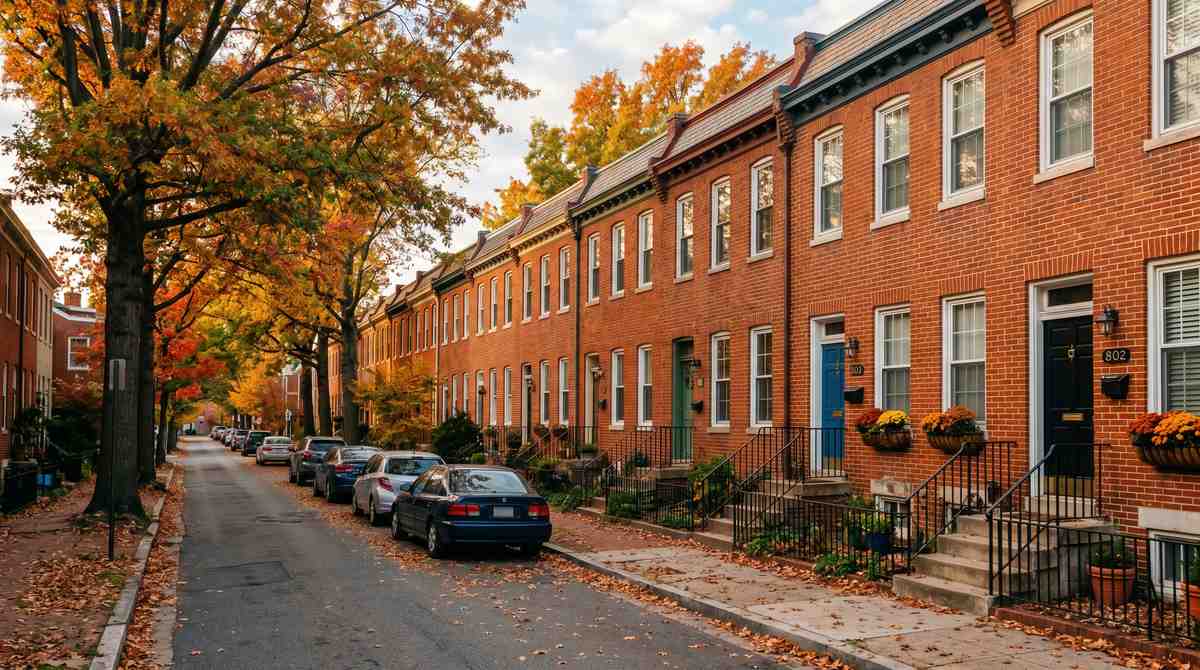
Arlington, VA is defined architecturally by its rows of brick townhomes and converted apartments, many built between the 1930s and 1970s to house the region’s growing federal workforce. These homes share party walls, often have partially below-grade basements, and were built with construction standards that predate modern moisture management techniques. The combination creates a mold environment with a specific set of risks that homeowners in Arlington need to understand — and address proactively.
Why Row Homes Create Unique Mold Conditions
Standard single-family homes have exterior walls on all four sides, allowing moisture that enters through one exterior surface to escape relatively quickly through normal ventilation and temperature gradients. Row homes and attached townhouses have exterior exposure on only the front and rear — the two party walls are shared, essentially buried against adjacent units. This means moisture that migrates into a party wall from one side has nowhere to go, creating a persistent wet zone that frequently supports mold growth in the wall cavity between units.
Additionally, many Arlington row homes were built without adequate moisture barriers at the rim joist — the framing member that sits atop the foundation wall at grade level. This zone is chronically susceptible to air infiltration from both the exterior and the crawl space below, creating a moisture convergence point directly at the junction between the foundation and wood framing. Our mold inspection services in Arlington, VA specifically include rim joist assessment as a standard inspection component.
HVAC Systems in Older Row Homes
Many Arlington row homes installed forced-air HVAC systems when they were renovated in the 1980s and 1990s, with duct runs passing through basement ceiling cavities, crawl spaces, and interior wall chases. These ducts — often flex duct rather than rigid sheet metal — are prone to condensation on their exterior surfaces during summer cooling operation, and can develop interior mold growth if the system draws humid air from unconditioned spaces. HVAC mold testing using swab samples from supply registers and air handler coils is a critical diagnostic step in any row home inspection where occupants report musty odors that appear or worsen when the HVAC system runs.
Crawl Space Conditions in Arlington Row Homes
A significant percentage of Arlington row homes have crawl spaces rather than full basements beneath the main living floor. These crawl spaces — often shallow, poorly ventilated, and inaccessible — accumulate ground moisture year-round and frequently develop mold on the wood floor joists directly above. In severe cases, the mold growth visible on floor joists from below corresponds to cold, musty flooring, pest damage in softened wood, and elevated interior air mold spore counts throughout the home. A professional crawl space mold inspection is the only reliable way to assess the true condition of these typically inaccessible spaces.
Party Wall Mold: A Shared Problem
One of the most challenging mold situations in Arlington row homes involves party wall moisture migration. If an adjacent unit has experienced plumbing leaks, roof drainage issues, or condensation-related problems, the moisture can migrate through the shared masonry wall into your unit — and vice versa. The EPA mold guidance emphasizes that moisture source identification is the most critical step in any remediation effort, and for party wall situations, this requires coordination between adjacent property owners.
- Musty odors concentrated near interior shared walls are a primary indicator of party wall moisture issues
- Thermal imaging can identify temperature anomalies within party walls without destructive investigation
- A professional home mold inspection documents findings with photographs suitable for discussions with neighbors or HOA management
Frequently Asked Questions
Can mold from my neighbor’s row home unit come into mine?
Yes. Shared walls in attached housing are not airtight. Mold spores, moisture, and mycotoxins can migrate through shared masonry walls, shared HVAC systems, and gaps around pipe penetrations between units. If your neighbor has a significant mold problem, your unit is at elevated risk.
Who is responsible for mold remediation in a row home — the owner or the HOA?
Responsibility depends on whether the mold originated in a common element (shared roof, exterior wall) or within individual unit systems (plumbing, HVAC). Review your HOA documents and condominium declaration carefully. A written inspection report establishing the moisture source is essential for these determinations.
Do Arlington row home values decrease with a history of mold?
Disclosed and professionally remediated mold history, supported by a clearance inspection report, typically has minimal impact on resale value. Undisclosed mold discovered post-purchase creates significant legal liability and remediation costs that directly impact value.
How long does a crawl space mold inspection take in an Arlington row home?
A crawl space inspection typically adds 30 to 45 minutes to a full home inspection. Access is sometimes challenging in shallow Arlington crawl spaces, but a certified inspector can usually assess wood joist conditions, ground moisture levels, and visible mold without requiring full interior access.
Own or manage a row home in Arlington? Contact DMV Mold at (301) 379-1715 or visit our contact page to schedule a professional mold inspection.