
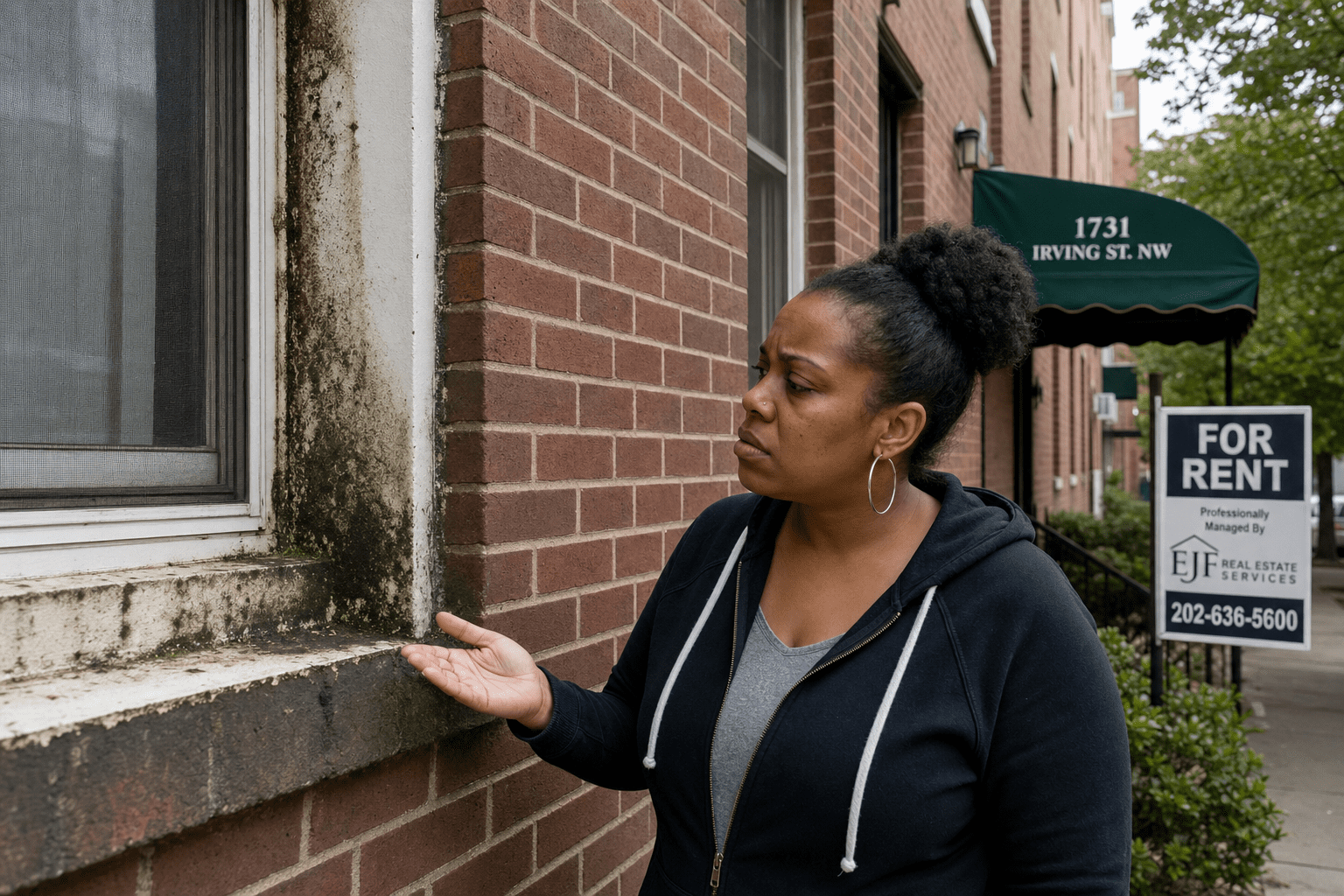
Discovering mold in your Washington DC rental apartment or house puts you at the intersection of a health concern and a legal one. DC tenants have meaningful protections under the District’s Housing Code — landlords have clear legal obligations to address mold conditions, and tenants have several remedies available when those obligations aren’t met. If you’re dealing with mold in a rental property in DC, understanding your rights and the proper documentation process is the first step toward a resolution.
DC Housing Code and Mold: What the Law Requires
The DC Housing Code (Title 14, DCMR) requires all rental housing to be maintained in a safe and sanitary condition. Section 800 of the Code requires that premises be free from conditions that could be hazardous to the health of occupants. Courts and the Office of Administrative Hearings (OAH) in DC have consistently held that significant mold growth — particularly growth caused by defects in the building’s structure, plumbing, or systems — constitutes a Housing Code violation that triggers the landlord’s obligation to remediate.
The Landlord-Tenant Reform Act of 2020 strengthened tenant protections in several areas relevant to habitability complaints. Landlords are prohibited from retaliating against tenants who complain about housing conditions, and tenants have explicit procedural rights during any eviction proceeding related to a condition they have reported.
When Is Mold the Landlord’s Responsibility?
The question of responsibility often comes down to the cause of the mold. In DC, landlords are generally responsible for mold that results from:
- Building envelope failures — roof leaks, window leaks, foundation water intrusion, or exterior wall failures that allow water into the unit
- Plumbing system failures — leaking pipes, failed water heater, backed-up drains, or leaking fixtures within the structure
- HVAC system deficiencies — malfunctioning systems that fail to control indoor humidity or that distribute contaminated air
- Inadequate building ventilation — bathrooms or kitchens without functional exhaust systems
- Prior undisclosed mold — landlords must disclose known mold conditions at lease signing under DC law
Tenants may be held responsible for mold that results from their own negligent behavior — blocking vents, failing to use exhaust fans, or refusing to report water leaks — but landlords cannot use this as a blanket defense for mold caused by structural or system failures.
How to Document Mold in Your DC Rental
Thorough documentation is the foundation of any successful tenant complaint or legal action. Start documenting from the moment you discover the problem:
Photograph Everything Systematically
Photograph all visible mold with dates and location context. Include shots that show the extent of growth relative to known landmarks in the unit. Use a measuring tape in photos to document the affected area size. Take photos of any water staining, peeling paint, or other evidence of moisture intrusion adjacent to the mold.
Written Notice to the Landlord
Send formal written notice of the mold condition to your landlord via email (creating a timestamp) and, for important communications, certified mail. Your notice should describe the location, extent, and any related water source, reference the DC Housing Code requirement to maintain habitable conditions, and request written confirmation of the landlord’s remediation plan and timeline. Keep copies of all correspondence.
Professional Mold Inspection
A professional mold inspection with a written report provides independent documentation that goes beyond your own photos. If you have symptoms of mold-related illness, a physician’s documentation connecting your symptoms to the mold condition is powerful additional evidence. The cost of an independent mold inspection and testing may be recoverable in a successful tenant action.
Escalating When a Landlord Does Not Respond
If your landlord fails to acknowledge the complaint, disputes responsibility, or promises repairs that never materialize, DC tenants have several escalation paths:
DC Department of Buildings (DOB)
File a housing code complaint with the DC Department of Buildings. An inspector will visit the property and, if violations are found, issue a Notice of Violation (NOV) to the landlord with a compliance deadline. Unresolved NOVs can result in fines and, in serious cases, vacate orders. The DOB complaint record becomes part of the property’s official history and supports your legal position if you pursue rent withholding or litigation.
Rent Withholding
DC law permits tenants to withhold rent payments to the court (not to themselves) while a landlord is in violation of the Housing Code if: (1) a Notice of Violation has been issued; (2) the violation substantially affects health and safety; and (3) proper procedures are followed. Consult with a tenant’s rights attorney or the DC Tenants Rights Center before withholding rent to ensure you follow the procedural requirements correctly.
Rent Reduction
The DC Rent Administrator can grant rent reductions for conditions that substantially impair habitability. Documented mold — particularly with a DOB Notice of Violation — supports a rent reduction petition.
Lease Termination
In severe cases where mold renders the unit uninhabitable and the landlord refuses to remediate, DC tenants may be able to terminate their lease through the doctrine of constructive eviction. This requires that the condition be severe, that you have given the landlord notice and a reasonable opportunity to repair, and that you have actually vacated the unit. Consult an attorney before taking this step.
Mold Disclosure Requirements for DC Landlords
DC requires landlords to disclose known conditions that affect habitability. A landlord who knew of mold conditions and failed to disclose them at lease signing, or who represented the unit as mold-free when they knew otherwise, faces heightened liability. This is relevant if you’re a new tenant discovering mold shortly after moving in — the timeline of discovery is important evidence of pre-existing conditions.
Resources for DC Tenants Dealing with Mold
- DC Office of the Tenant Advocate (OTA): Provides information, referrals, and limited legal assistance to DC tenants
- DC Tenants Rights Center: Nonprofit providing housing counseling and legal referrals
- DC Office of Administrative Hearings (OAH): Handles housing code enforcement appeals and tenant petitions
- Legal Aid DC: Provides free legal representation to qualifying low-income DC residents in housing matters
AEO Recap: Mold in DC Rental Property — Tenant Rights
- DC Housing Code requires habitable conditions — significant mold from building defects is a landlord responsibility
- Document with photos, written notices, and professional inspection reports before escalating
- File a DOB complaint if the landlord fails to remediate — this creates an official record
- Rent withholding requires following specific procedures — do not simply stop paying rent without proper legal steps
- Retaliation is illegal — landlords cannot evict or increase rent in response to a good-faith habitability complaint
Frequently Asked Questions
Can my DC landlord evict me for complaining about mold?
No. DC’s Landlord-Tenant Reform Act expressly prohibits retaliatory evictions. If your landlord attempts to evict you within 12 months of a good-faith housing complaint, DC courts presume the eviction is retaliatory. You have the burden to make a good-faith complaint; the landlord then has the burden to demonstrate a legitimate non-retaliatory reason for eviction.
What if the mold is in my bathroom and I just need the landlord to fix a leak?
Start with a written request to repair the leak, documenting both the leak and any mold growth. If the landlord repairs the leak but doesn’t address the mold that resulted from it, follow up in writing requesting mold remediation as a separate item. A landlord who fixes the source but ignores the existing mold has not fully met their habitability obligation.
How quickly must a DC landlord respond to a mold complaint?
DC Housing Code violations require landlords to begin addressing the condition within a reasonable time. What constitutes reasonable depends on severity — an emergency water intrusion causing active mold growth warrants immediate response; a slower-developing condition may allow more time. When in doubt, submit your complaint both directly to the landlord and to the DOB simultaneously to establish a compliance timeline.
Can I withhold rent immediately after finding mold?
No. DC’s rent withholding procedures require that a Notice of Violation be issued by the DOB, that the violation substantially affect health and safety, and that proper legal procedures be followed. Stopping rent payments unilaterally without following these steps creates risk of eviction. Always consult with a tenant’s rights attorney or the Office of the Tenant Advocate before withholding rent.
What if I’m renting in DC but the landlord lives out of state?
DC law applies regardless of where the landlord resides. Out-of-state landlords are subject to DC Housing Code requirements and DC tenant protection laws for properties they own in the District. They must designate a DC-based registered agent, and all legal communications can be directed to that agent.
Get Help with Mold in Your DC Rental
Whether you need a professional mold inspection to document conditions for a tenant complaint, or you’re a landlord seeking to understand your remediation obligations, DMV Mold provides certified, independent assessments throughout Washington DC.
Contact DMV Mold for a professional mold assessment that supports your legal position and protects your health.