
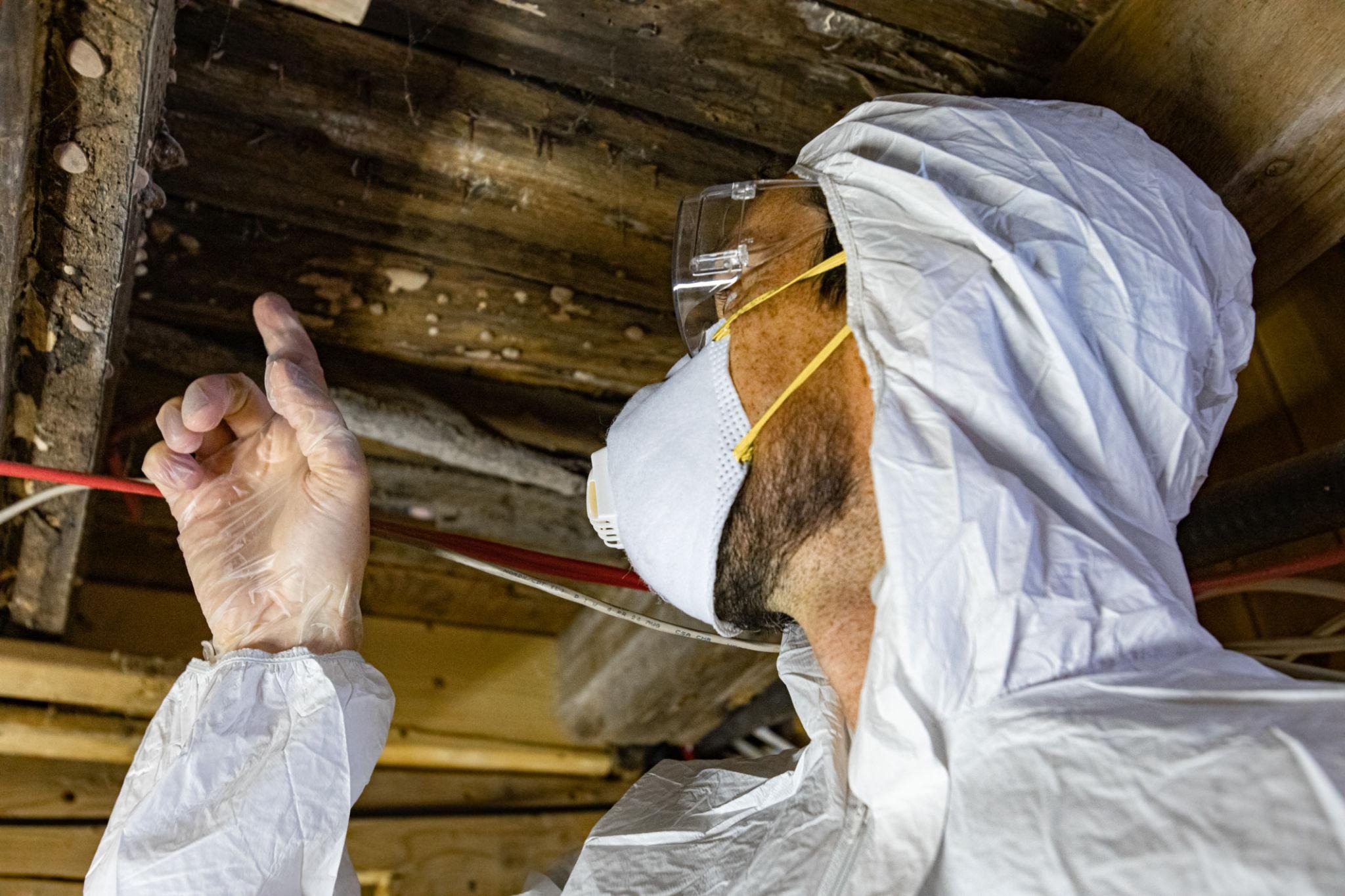
Mold is not always visible. In many homes, it grows quietly behind walls, under flooring, inside attic spaces, or around areas with hidden moisture sources. By the time obvious visible growth appears, the underlying problem may have been present for weeks or even months — and the affected area may be significantly larger than expected.
Understanding the warning signs of hidden mold, the conditions that cause it, and when to schedule a professional mold inspection can help you protect both your property and the indoor environment your family relies on every day.
What Is Hidden Mold?
Hidden mold refers to mold colonies growing in areas that are not visible during routine household activity. Unlike surface mold on bathroom tile or grout, hidden mold develops inside wall cavities, beneath carpet and flooring, behind cabinets, under sinks, inside attic spaces, around HVAC components, and in crawl spaces. Because it is out of sight, many homeowners first notice secondary symptoms — an unusual odor, a recurring health complaint, or unexplained surface damage — rather than the mold itself.
Professional inspectors use moisture meters, thermal imaging cameras, and targeted mold testing to find what visual checks cannot.
Common Signs of Hidden Mold
1. Persistent Musty or Damp Odors
A persistent earthy smell — especially in bathrooms, basements, closets, or laundry rooms — is one of the most reliable indicators of hidden mold growth. Mold produces microbial volatile organic compounds (MVOCs) that create a characteristic musty odor even when no growth is visible to the naked eye.
2. Past or Ongoing Water Damage
Leaks from plumbing lines, roofs, windows, or appliances create exactly the conditions mold needs to establish itself. If materials — drywall, insulation, wood framing — were not fully dried within 24–48 hours of water exposure, mold growth is likely. This is especially true after flooding, pipe bursts, or roof leaks that were not immediately remediated.
3. Surface Staining and Discoloration
Water marks, bubbling or peeling paint, warped drywall, and dark staining on walls or ceilings may indicate moisture trapped behind surface materials. These visual cues often point to water damage that is actively supporting mold growth inside the wall or ceiling cavity.
4. Elevated Humidity or Recurring Condensation
Rooms that consistently feel damp, develop heavy condensation on windows, or register high humidity readings may have ventilation or moisture control problems. High indoor humidity — above 60% — significantly increases the likelihood of mold establishing itself in concealed areas. Professional indoor air quality testing can quantify humidity levels and identify specific problem areas.
5. Unexplained Allergy-Like Reactions
Some people notice sneezing, nasal irritation, headaches, or respiratory discomfort that seems worse inside certain areas of the home and improves when they leave. These reactions may be consistent with elevated mold spore counts in the indoor air. Review our guide to symptoms of mold exposure and mold allergy symptoms for more information.
What Causes Hidden Mold?
Mold needs three things to grow: a moisture source, an organic surface to colonize, and time. Common causes of hidden mold in homes include:
- Slow or pinhole plumbing leaks behind walls or under floors
- Roof leaks that allow water to penetrate attic insulation and framing
- Poor bathroom ventilation that allows steam to accumulate in wall cavities
- Condensation forming on cold pipes, windows, or exterior walls
- Flooding or water intrusion from storms, sewage backups, or appliance failures
- Damp basements or crawl spaces with foundation moisture or inadequate vapor barriers
- HVAC drip pan overflows, duct condensation, or moisture around air handler units
- Consistently high indoor humidity without adequate ventilation or dehumidification
Even small moisture problems that seem manageable can lead to significant hidden mold over time. The U.S. EPA’s Mold Course notes that mold can grow within 24–48 hours of a moisture event under favorable conditions.
Where Hidden Mold Is Most Often Found
Professional mold inspections frequently uncover growth in these locations:
- Behind drywall in areas that experienced water damage
- Under sinks and inside cabinet bases near plumbing
- Around and beneath tubs, showers, and toilet bases
- Inside attic spaces near roof penetrations or failed flashing
- In basements and crawl spaces with foundation moisture issues
- Behind and beneath washing machines and dishwashers
- Around HVAC drip pans, coils, and supply ducts
- Beneath flooring materials after spills, flooding, or slow leaks
Why DIY Checks Are Often Insufficient
Cleaning visible mold from surfaces rarely resolves hidden mold problems. If moisture remains trapped inside building materials, mold will continue growing and surface growth will return. A professional mold inspection can identify:
- The likely moisture source driving the growth
- Areas with elevated moisture readings that warrant closer examination
- Whether air or surface mold testing is appropriate
- Conditions inside wall cavities or under flooring that visual checks miss
- Practical next steps based on findings
This helps homeowners avoid the frustration and expense of repeated surface cleaning that never addresses the underlying cause. Review our mold inspection cost guide and mold testing cost guide before scheduling.
How to Reduce Hidden Mold Risk at Home
While professional inspection is the most reliable way to identify existing hidden mold, you can reduce the risk of future growth by:
- Repairing plumbing leaks within 24–48 hours of discovery
- Running bathroom exhaust fans during and after every shower
- Keeping indoor humidity between 30% and 50% year-round
- Drying wet materials — flooring, drywall, insulation — immediately after water exposure
- Improving airflow in consistently damp spaces like basements and crawl spaces
- Inspecting after significant rain events, storms, or any plumbing incident
- Scheduling periodic inspections of basements, crawl spaces, and attics
The CDC recommends controlling moisture as the primary defense against indoor mold growth.
When to Schedule a Professional Mold Inspection
It is time to schedule a professional inspection if you notice any of the following:
- A musty smell with no identifiable source
- Recent water damage from any source that may not have dried completely
- Mold returning on surfaces shortly after cleaning
- Visible staining, warped surfaces, or bubbling paint
- Concerns about mold exposure symptoms in household members
- Buying or selling a home and wanting a clear understanding of its condition
- Ongoing indoor air quality worries that a general inspection hasn’t resolved
Get Expert Answers from DMV Mold
DMV Mold provides professional mold inspections, mold testing, and indoor air quality evaluations for homeowners across Brookeville, MD and the entire DMV region — including Washington D.C., Virginia, and Pennsylvania.
Call: (301) 379-1715
Email: tim@dmvmold.com
If you suspect hidden mold in your home, get clear answers from a trusted professional. Contact DMV Mold today to schedule your inspection.