
What Happens During a Professional Mold Inspection?
Many homeowners and renters schedule a professional mold inspection without a clear picture of what the process actually involves. That uncertainty can lead to anxiety or — worse — to delaying a necessary inspection because the process feels unknown. This guide walks you through every step from the moment our inspector arrives at your door to the day your lab results come back.
Step 1: Pre-Inspection Conversation
Before any equipment comes out, a qualified inspector will spend five to ten minutes asking questions about your home’s history and your concerns. Key information gathered includes: when you first noticed symptoms (odors, stains, health reactions), any known water intrusion events (plumbing leaks, flooding, roof damage), the age and construction type of the property, and which areas of the home concern you most. This conversation shapes which zones receive the most thorough examination.
Step 2: Visual and Thermal Assessment
The inspector moves methodically through the property, starting at the lowest level — basement or crawl space — and working upward. Visual assessment includes examining wall cavities at penetrations (pipe chases, electrical boxes), checking behind furniture near exterior walls, inspecting window sills and door frames, and looking at ceiling areas below bathrooms and laundry rooms. Many inspectors supplement visual checks with a thermal imaging camera, which can detect temperature differentials caused by moisture behind walls or under floors without destructive testing.
Step 3: Moisture Mapping
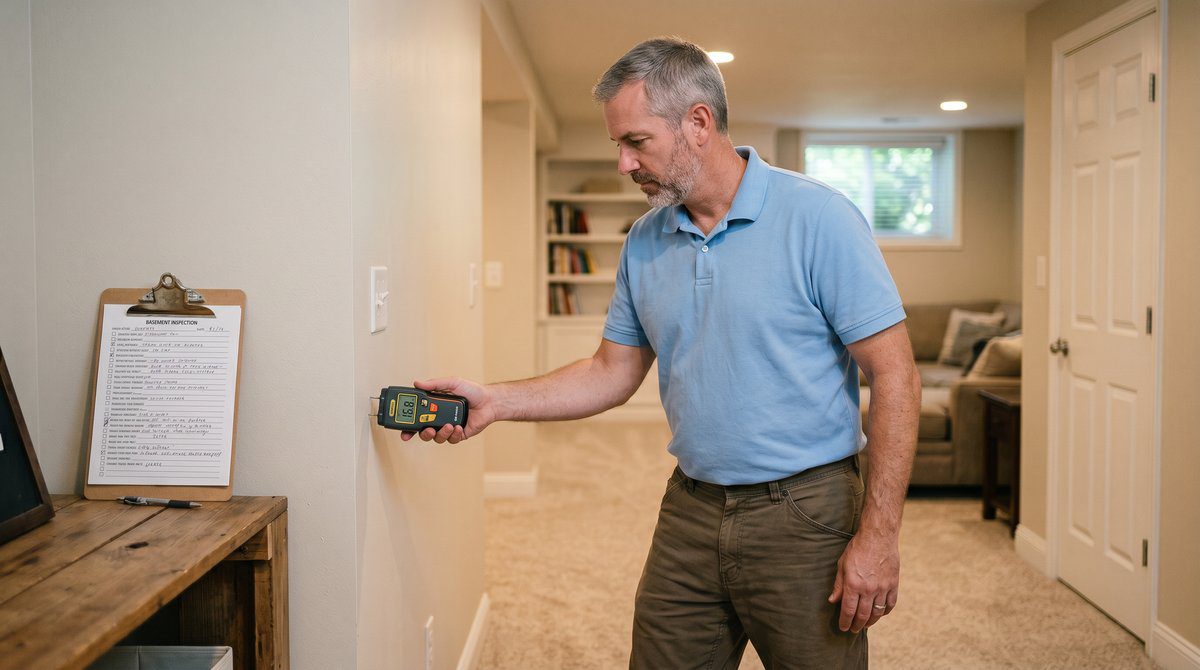
A calibrated digital moisture meter is used on walls, floors, and ceilings throughout the home. Readings above 16% in wood framing or 1.5% in concrete indicate elevated moisture levels that create mold-favorable conditions. Inspectors document all elevated readings by room and surface type, creating a moisture map of the property. This map is included in your inspection report and serves as a baseline for future comparison if remediation is performed.
Step 4: Air Sampling
Air sampling is the most scientifically rigorous part of a mold inspection. Using a calibrated pump attached to a laboratory cassette, the inspector captures a precisely measured volume of indoor air — typically 75 liters — from areas of concern and from an outdoor reference location. The cassettes are sealed, chain-of-custody documented, and shipped to an accredited laboratory for analysis. Air quality mold testing produces a spore trap analysis that identifies mold genera present and quantifies spore counts per cubic meter of air.
Step 5: Surface Sampling (When Warranted)
If visible staining or suspected growth is identified, the inspector may collect surface samples using a swab, tape-lift, or bulk sample technique. Surface mold testing confirms whether a discolored area is active mold growth, dormant mold, or simply organic staining from water without live spores. This distinction matters for remediation planning and for insurance documentation purposes.
Step 6: Lab Analysis and Reporting
Laboratory results typically return within two to five business days. Your written report includes the moisture map, all sample locations photographed, raw lab data, a comparison of indoor versus outdoor spore counts, identified mold species, and clear remediation recommendations if elevated levels are found. The EPA guide on mold in the home recommends professional remediation for any visible mold exceeding ten square feet, regardless of species.
Understanding the mold inspection cost upfront helps you budget appropriately. Most residential inspections in the DC Metro area range from $299 to $599 depending on property size and the number of samples collected.
- Inspection duration: 1.5 to 3 hours for a typical residential property
- Lab turnaround: 2 to 5 business days standard; rush available
- Written report included with every inspection
- Inspector explains all findings in plain language before leaving
Frequently Asked Questions
Do I need to leave my home during a mold inspection?
No. You are welcome — and encouraged — to be present during the entire inspection so you can ask questions in real time. Pets should ideally be secured in a single room to allow full access to all areas of the home.
How is a mold inspection different from a mold test?
A mold inspection is the physical walkthrough and assessment; mold testing refers specifically to the collection and laboratory analysis of air or surface samples. Most professional inspections include both components, but it is worth confirming when you schedule.
Will the inspector open walls or cause damage?
Standard mold inspections are non-destructive. Inspectors use moisture meters and thermal imaging to detect what is happening inside wall cavities without cutting drywall. Invasive sampling is only recommended when non-destructive methods indicate a high probability of concealed growth.
How long until I get my results?
Air and surface samples are sent to an accredited laboratory. Standard turnaround is two to five business days. Rush processing (24 to 48 hours) is available at an additional cost for urgent situations such as real estate closings.
Have more questions about the inspection process? Call DMV Mold at (301) 379-1715 or reach us through our contact page. We serve homeowners, renters, and property managers throughout DC, MD, VA, and PA.