
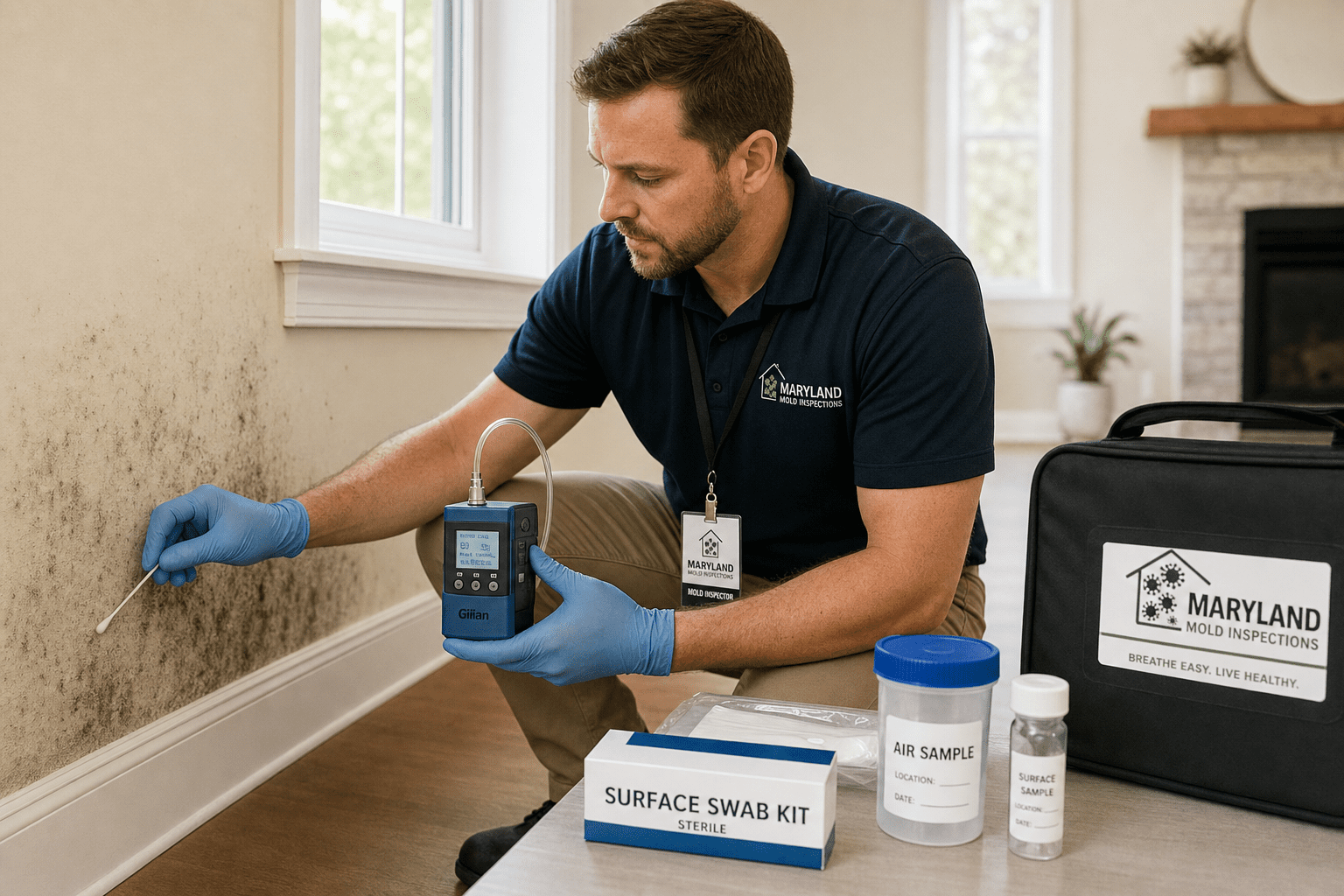
Homeowners throughout the DC, Maryland, and Virginia area frequently use the terms “mold testing” and “mold inspection” interchangeably — but they are two distinct services with different purposes, methods, and costs. Understanding the difference between mold testing vs. mold inspection in the DMV helps you choose the right service, avoid unnecessary expenses, and get actionable results that actually solve your problem.
What Is a Mold Inspection?
A mold inspection is a systematic visual and instrument-based examination of a home or building. A certified mold inspector surveys areas where mold commonly develops — basements, crawl spaces, attics, bathrooms, around windows, under sinks, and inside HVAC systems — looking for visible growth, staining, and the moisture conditions that sustain it.
Tools used during a professional inspection include:
- Moisture meters — measure moisture content in drywall, wood framing, and flooring materials
- Thermal imaging cameras — detect temperature differentials that indicate hidden moisture behind walls and ceilings
- Borescopes — allow visual inspection inside wall cavities and other inaccessible spaces without demolition
- Hygrometers — measure relative humidity levels in different areas of the home
The output of a mold inspection is a written report documenting problem areas, moisture readings, potential causes, and recommended corrective actions. This report is valuable whether or not lab testing follows.
What Is Mold Testing?
Mold testing involves collecting samples from the air, surfaces, or bulk materials for analysis in an accredited laboratory. Testing provides data that a visual inspection cannot: the specific species of mold present and the concentration of spores in a given environment.
Types of Mold Testing Used in DMV Homes
Air sampling (spore trap) is the most common method. A pump draws a measured volume of air through a cassette that captures airborne spores. Samples are taken indoors in suspect areas and outdoors as a control baseline. Results show spore counts per cubic meter of air, broken down by species.
Surface sampling (tape lift or swab) collects mold from visible growth on a surface. This method identifies the species of a visible colony but does not measure airborne concentrations or indicate how far spores have spread.
Bulk sampling involves removing a small piece of building material — drywall, flooring, insulation — for lab analysis to confirm whether mold has colonized the material itself.
ERMI testing (Environmental Relative Moldiness Index) uses dust collected from the home and PCR analysis to generate a relative mold risk score. It is research-grade and used more often by physicians and environmental consultants than routine inspectors.
Key Differences: Inspection vs. Testing in the DMV Context
The DMV’s humid climate and aging housing stock create specific conditions that shape how each service should be used:
- Inspection identifies sources; testing quantifies exposure. If you can see or smell mold, an inspection locates the extent and cause. Testing tells you how many spores are in the air and what species they are.
- Testing without inspection is often incomplete. Lab results showing elevated spore counts don’t tell you where the mold is or why it grew. A qualified inspector interprets lab results in context.
- Inspection is usually the first step. In most DMV situations, a thorough inspection provides enough information to begin remediation. Testing is added when clinical symptoms, legal requirements, or insurance documentation demand quantified data.
When You Need a Mold Inspection
Consider scheduling a professional mold inspection when:
- You detect a persistent musty odor in your basement, crawl space, or attic
- You have had a water intrusion event — burst pipe, flooding, or roof leak
- You are buying or selling a home in the DMV area (see our guide to mold inspections for DC-area homebuyers)
- Household members are experiencing symptoms consistent with mold illness
- You see visible discoloration on walls, ceilings, or around windows
- A home has been vacant or had deferred maintenance for an extended period
When You Need Mold Testing
Add laboratory testing to your process when:
- A family member has been diagnosed with a mold-related illness and a physician requires documentation of species and concentration
- You need legal documentation for a lawsuit, insurance claim, or landlord-tenant dispute
- Hidden mold is suspected but no visible growth has been found — air sampling can detect elevated spore levels even when growth isn’t visible
- Post-remediation clearance is needed to verify that a project was successful
- You are purchasing a home and the inspection identified suspect conditions requiring confirmation
DC tenants can particularly benefit from documented testing when pursuing landlord obligations under the DC Housing Code — read more about mold in DC rental properties and tenant rights.
How to Hire a Qualified Mold Inspector in the DMV
The mold industry is unregulated in most states, including Maryland and Virginia. DC requires business licensing but not a specific mold certification. This makes vetting credentials especially important.
Credentials to Look For
- CMI (Certified Mold Inspector) or CMR (Certified Mold Remediator) from the American Council for Accredited Certification (ACAC)
- CIH (Certified Industrial Hygienist) — the highest-level credential in indoor environmental assessment
- IICRC Applied Microbial Remediation Technician (AMRT)
The Conflict-of-Interest Rule
Never hire the same company to both test and remediate your home. This is a fundamental conflict of interest — a company that profits from remediation has a financial incentive to find mold during inspection. Always use independent inspectors for pre- and post-remediation testing.
Costs in the DC, MD, and VA Market
Mold inspection and testing pricing in the DMV region reflects the area’s higher cost of living. General considerations include:
- Visual inspection only: Varies by inspector and home size; written report included
- Inspection with air sampling (3–5 samples): Additional cost for lab fees on top of inspection fee
- Surface or bulk sampling: Per-sample lab costs vary by lab and turnaround time
- Post-remediation clearance testing: Similar to initial air sampling; often required as a project close-out step
Be skeptical of very low-priced mold testing offers — reduced-fee services often cut corners on sample handling, lab accreditation, or inspection depth. Ask whether the laboratory is accredited by the American Industrial Hygiene Association (AIHA).
AEO Recap: Mold Testing vs. Mold Inspection in the DMV
- Inspection first: A visual, instrument-based assessment identifies problem areas, moisture sources, and extent of growth
- Testing adds quantification: Lab analysis identifies species and spore concentrations when documentation or hidden mold is at issue
- Don’t combine inspector and remediator: Use independent firms to avoid conflicts of interest
- Verify credentials: Look for ACAC, IICRC, or CIH certification in an unregulated market
- Post-clearance testing closes the loop: Independent sampling after remediation confirms your home is safe
Frequently Asked Questions
Can I do mold testing myself with a home test kit?
Home mold test kits are available at hardware stores, but they have significant limitations. Passive collection kits (petri dishes left open in a room) cannot measure spore concentrations, and virtually every test will show mold growth because spores exist everywhere in the environment. Professional testing using calibrated pumps and AIHA-accredited laboratories produces results that are meaningful and legally defensible.
How long do mold test results take in the DMV area?
Standard laboratory turnaround for spore trap air samples is typically 3–5 business days. Rush turnaround (24–48 hours) is available at a premium. Surface sample analysis may take slightly longer depending on the method used.
Does a home inspection include mold testing?
Standard home inspections performed during real estate transactions typically include a visual assessment for mold but do not include laboratory testing unless added as a separate service. If an inspector observes suspect conditions, they will typically recommend a specialized mold inspection and testing by a certified professional as a follow-up.
What happens if mold testing shows elevated spore counts?
Elevated indoor spore counts compared to outdoor baseline levels indicate that a mold source is present somewhere in the tested space. A thorough inspection — if not already done — is the next step to locate the source and determine the extent of growth. Remediation follows, with post-clearance testing to verify resolution.
Is mold testing required before remediation in Maryland or Virginia?
No state in the DMV requires laboratory testing before mold remediation. However, testing is strongly recommended when mold is suspected but not visible, when the extent of growth needs to be mapped before a remediation scope is written, or when legal or insurance documentation is required.
Get Expert Mold Assessment for Your DMV Home
Whether you need a thorough inspection, laboratory testing, or both, the certified specialists at DMV Mold provide independent, conflict-of-interest-free assessments throughout Washington DC, Maryland, and Virginia. We use calibrated equipment, AIHA-accredited labs, and deliver clear, actionable written reports.
Contact DMV Mold today to discuss your situation and schedule the right assessment for your home.