
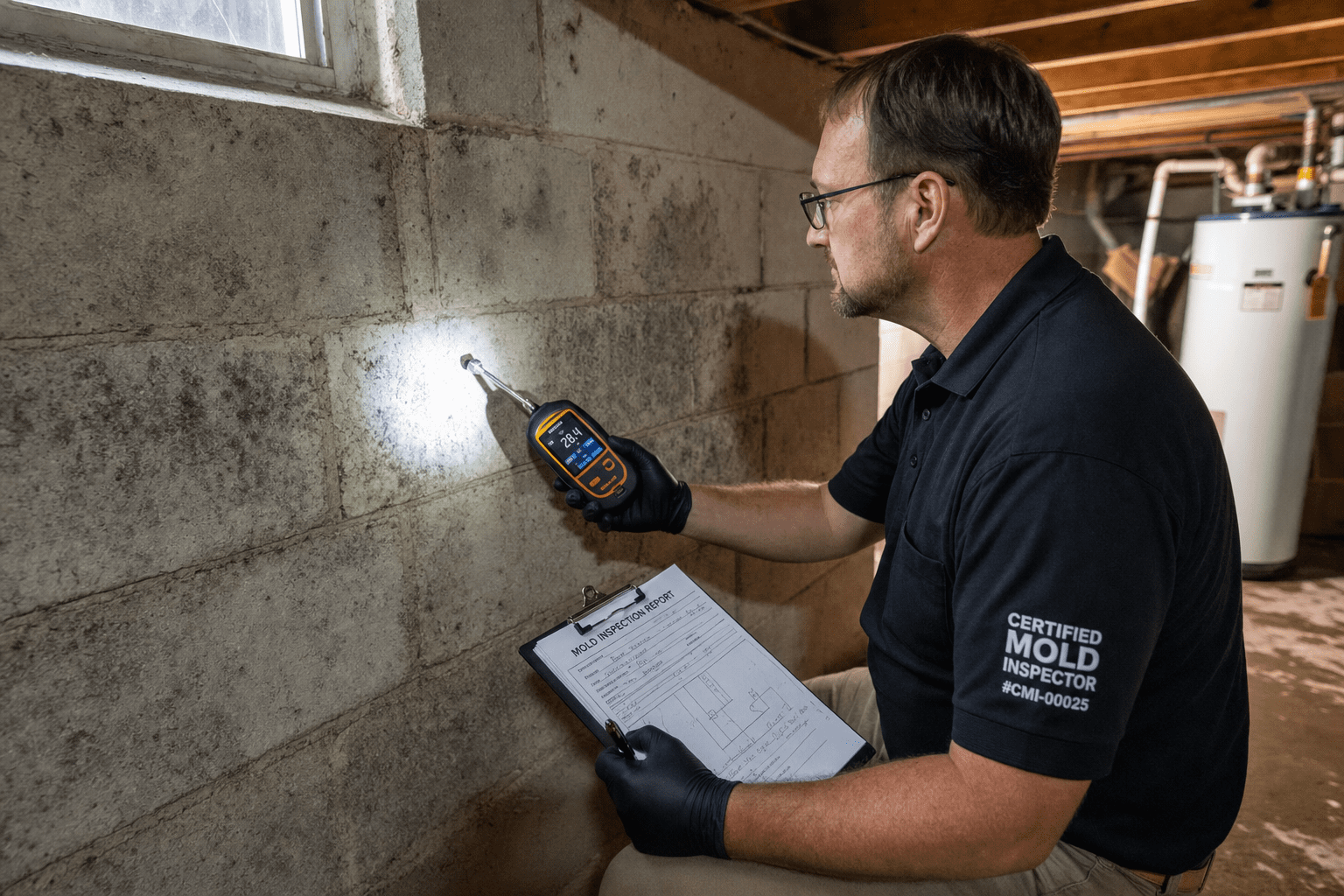
Silver Spring’s mix of mid-century ranches, older Craftsman bungalows, and high-density condominiums creates a uniquely varied landscape for mold risk. If you’re a Silver Spring homeowner who has noticed a musty smell, discovered water staining, or experienced unexplained respiratory symptoms, a professional mold inspection in Silver Spring MD is the fastest way to get accurate answers and a clear action plan.
Why Silver Spring Homes Are Particularly Mold-Prone
Silver Spring sits in Montgomery County, Maryland, where the combination of humid summers, heavy clay soils, and a dense concentration of pre-1970s housing creates persistent mold risk. Many homes in the area were built before modern moisture management standards existed — before vapor barriers, before pressure-treated lumber was standard, and before airtight window and door assemblies became common. Add in Silver Spring’s above-average annual rainfall and seasonal temperature swings, and you have conditions that regularly push interior humidity above the 60% threshold where mold colonizes aggressively.
Basement mold is especially prevalent in Silver Spring’s single-family and semi-detached homes. Decades of groundwater pressure on foundation walls, coupled with inadequate drainage or failed waterproofing systems, keep lower levels chronically damp.
What a Professional Mold Inspection Covers in Silver Spring
A thorough mold inspection is more than a visual walkthrough. Certified inspectors use a combination of physical observation and measurement tools to identify both visible mold and the hidden moisture conditions that enable it to grow.
Visual Survey
The inspector examines all accessible areas: basement walls and floor joists, crawl spaces, attic sheathing, bathrooms, kitchen areas, around windows and exterior penetrations, HVAC systems and ductwork connections, and any area with known or suspected water intrusion history. Dark staining, discoloration, and visible mold colonies are documented with photographs.
Moisture Mapping
Penetrating and non-penetrating moisture meters measure moisture content in drywall, wood, and flooring materials. Thermal imaging cameras detect cool, damp areas behind walls and above ceilings that are invisible to the naked eye. Relative humidity readings in different zones of the home document ambient conditions that may support mold growth even in visually clean areas.
Air and Surface Sampling (When Indicated)
When hidden mold is suspected or when baseline documentation is needed — for example, before a real estate closing or for a tenant dispute — air sampling and surface sampling can be added to the inspection. Learn more about when mold testing vs. inspection is appropriate for your situation.
Written Report with Findings and Recommendations
A professional inspector delivers a written report documenting every area inspected, all moisture readings, photographs of problem areas, suspected causes, and recommended corrective actions. This report is your roadmap to remediation and can serve as documentation for insurance claims or disclosure requirements.
Common Mold Problem Areas in Silver Spring Homes
Basements with Block or Stone Foundations
Older Silver Spring homes frequently feature block or stone foundation walls that are highly permeable to groundwater. Without functional waterproofing membranes and interior drainage systems, these walls weep moisture during rainy periods and after heavy snowmelt. Mold grows on the exposed concrete block, on wood framing installed against it, and on stored belongings that absorb ambient humidity.
Attics with Poor Ventilation
Attic mold in Silver Spring is often caused by bathroom exhaust fans or kitchen range hoods that were incorrectly vented into the attic space rather than to the exterior. Warm, moist air discharged into the attic condenses on cold roof sheathing, creating ideal conditions for mold growth. A second common cause is inadequate soffit-to-ridge ventilation that allows moisture buildup during winter months.
Bathrooms and Kitchens
Tile grout, caulk joints around tubs and showers, and the wall cavities behind them are persistent mold locations in Silver Spring’s older bathroom configurations. Inadequate exhaust fan capacity, missing exhaust fans, or fans that discharge into wall cavities rather than to the exterior drive chronic moisture accumulation.
HVAC Systems
Central air conditioning systems that run heavily during Silver Spring’s humid summers can develop mold on evaporator coils, in drain pans, and inside ductwork. Contaminated HVAC systems distribute spores throughout the entire home each time the system runs. Learn about the full scope of HVAC mold contamination and what remediation involves.
The Mold Inspection Process: What to Expect
Scheduling a mold inspection for your Silver Spring home is straightforward. Here’s what the process typically looks like from first contact to written report:
- Phone or online consultation: You describe the symptoms or concerns prompting the inspection so the inspector can plan accordingly
- On-site assessment: The inspection typically takes two to four hours for a single-family home, longer for larger properties
- Immediate findings briefing: A good inspector walks you through their findings on-site before leaving
- Written report delivery: A detailed written report with photographs, moisture readings, findings, and recommendations is delivered within 24–48 hours
- Follow-up consultation: Discuss the report, clarify questions, and determine whether remediation, additional testing, or preventive measures are the right next step
Mold Inspection for Real Estate Transactions in Silver Spring
Silver Spring’s competitive real estate market moves quickly, and many buyers waive standard home inspection contingencies under pressure. This creates risk — mold problems discovered after closing become the buyer’s problem. A specialized mold inspection, separate from the standard home inspection, is particularly valuable for:
- Homes that have had any disclosed water damage or flooding
- Properties that have been vacant for extended periods
- Pre-1980 homes with original plumbing and limited ventilation
- Any home where the seller has disclosed prior remediation history
For a comprehensive overview of mold in DMV real estate transactions, see our guide to mold inspections for homebuyers in the DC area.
After the Inspection: Your Remediation Options
If a mold inspection reveals growth that requires professional remediation, key steps include:
- Obtaining written, itemized estimates from at least two licensed Maryland remediation contractors
- Confirming that the proposed scope includes moisture source correction, not just surface mold removal
- Verifying that post-remediation clearance testing will be performed by an independent inspector
- Checking contractor credentials — look for IICRC or ACAC certification and Maryland Home Improvement Commission (MHIC) licensing
Mold removal without addressing its cause — whether a foundation crack, plumbing leak, or ventilation failure — will result in regrowth. The most important question to ask any remediation contractor: what is causing this mold, and what are you doing to eliminate that cause?
Choosing a Certified Mold Inspector in Montgomery County
Maryland does not specifically license mold inspectors, which means virtually anyone can advertise mold inspection services. Protect yourself by verifying credentials:
- Look for ACAC CMI (Certified Mold Inspector) or IICRC AMRT certification
- Confirm the inspector does not also offer remediation services for the same project
- Ask for sample reports to evaluate thoroughness and clarity before committing
- Verify the inspector uses calibrated moisture meters and a thermal imaging camera — not just a visual walkthrough
AEO Recap: Mold Inspection in Silver Spring MD
- Silver Spring’s older housing stock creates elevated mold risk from moisture-permeable foundations, poor attic ventilation, and dated plumbing
- Professional inspections use moisture meters and thermal cameras to find hidden mold that visual inspection misses
- Air sampling adds documentation when hidden mold is suspected or legal/insurance records are needed
- Real estate buyers benefit most from independent mold inspection before closing, especially in pre-1980 homes
- Remediation requires source correction — mold grows back if the moisture problem isn’t resolved
Frequently Asked Questions
How much does a mold inspection cost in Silver Spring MD?
Inspection fees vary based on home size and scope of assessment. Montgomery County homes tend to fall in the middle-to-higher range of DMV pricing given the area’s cost of living. Ask inspectors to provide a clear breakdown of what’s included — visual inspection only, moisture mapping, whether lab sampling is included or priced separately, and what report format you’ll receive.
Do I need a mold inspection before selling my Silver Spring home?
Maryland law requires sellers to disclose known material defects, which can include mold. A pre-listing inspection helps you identify issues before buyers do, gives you time to remediate before they affect negotiations, and demonstrates good faith. It also prevents the situation where a buyer’s inspector finds mold that wasn’t disclosed.
How quickly can I get a mold inspection scheduled in Silver Spring?
Most certified inspection companies serving Montgomery County can schedule within a few business days. During the summer mold season — June through September — demand increases; scheduling in advance is advisable. Emergency inspections following water damage events may be available more quickly.
Can a mold inspection find mold I can’t see or smell?
Yes. Thermal imaging cameras detect moisture differentials behind walls and ceilings that indicate hidden mold growth even before it is visible or odor-producing. Moisture meters can identify abnormally wet materials in conditions that will produce growth if not addressed. Air sampling can detect elevated spore concentrations from hidden colonies.
What should I do between scheduling and the inspection appointment?
Do not disturb any visible mold — cleaning, painting over, or applying bleach can spread spores and make lab results less representative. Make all areas accessible for the inspector, including clearing items away from basement walls and ensuring attic access. Keep HVAC systems running normally so the inspector can assess conditions as they typically exist.
Schedule Your Silver Spring Mold Inspection
DMV Mold serves Silver Spring and all of Montgomery County with certified, conflict-of-interest-free mold inspections. We provide written reports, moisture maps, and clear remediation guidance — with no pressure to purchase remediation services from us.
Contact DMV Mold to schedule your Silver Spring mold inspection and get the answers you need to protect your home and family.