
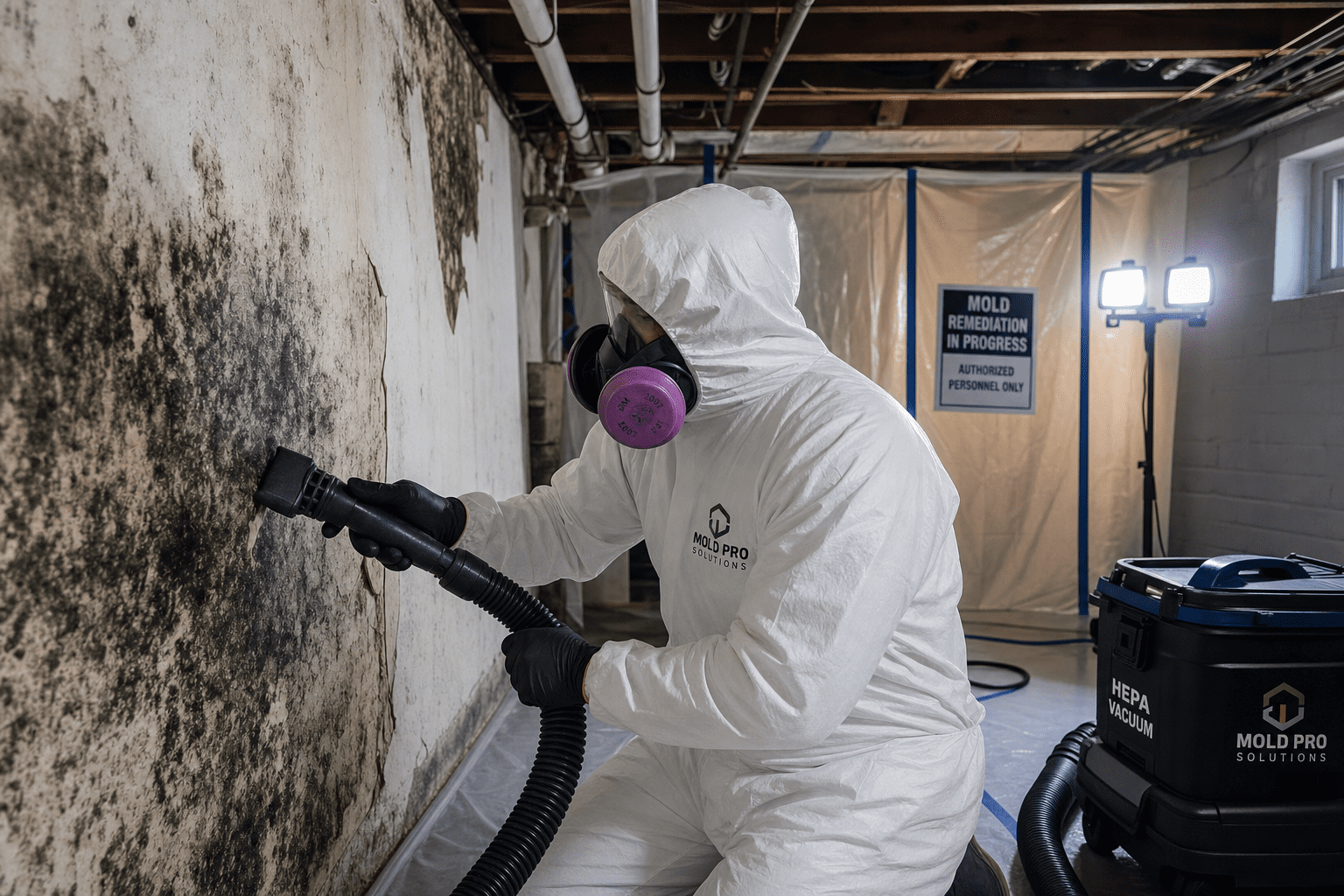
Black mold — formally known as Stachybotrys chartarum — is one of the most feared mold species in DC homeownership. Whether you’ve spotted it in a basement, behind drywall, or around a window frame, understanding how professional black mold removal in Washington DC works helps you act decisively and protect your household. In a city where aging housing stock, clay-heavy soils, and humid summers collide, black mold finds ideal conditions to colonize — fast.
What Is Black Mold and Why Does It Thrive in DC Homes?
Stachybotrys chartarum is a dark greenish-black mold requiring consistently wet cellulose — drywall paper, wood framing, ceiling tiles — to grow. Washington DC’s climate is tailor-made for it. Summer relative humidity regularly exceeds 70%, and the city sits on a former floodplain with high groundwater tables in many neighborhoods. Older rowhouses in Capitol Hill, Columbia Heights, and Petworth often have substandard vapor barriers and leaking basement walls that keep materials chronically damp.
Other species that appear dark or black — Aspergillus niger, Cladosporium, and Penicillium — are far more common than true Stachybotrys, but all warrant professional assessment. Only lab testing can confirm the species, which is why calling for a professional mold inspection before removal is the right first step.
Health Risks Associated with Black Mold Exposure
Mold exposure affects people differently based on age, immune status, and underlying respiratory conditions. Common symptoms reported by DC residents with mold-contaminated homes include:
- Persistent coughing, wheezing, or shortness of breath
- Nasal and sinus congestion that does not resolve seasonally
- Eye and throat irritation
- Skin rashes or hives after time spent in affected rooms
- Fatigue and cognitive difficulties sometimes called “brain fog”
- Worsening asthma or existing allergy symptoms
Children, elderly residents, and immunocompromised individuals face the greatest risk. If household members are experiencing symptoms consistent with mold-related illness, prioritize professional remediation rather than DIY attempts that can worsen exposure.
Mycotoxins and Their Role
Stachybotrys produces trichothecene mycotoxins under certain growth conditions. These secondary metabolites can be present in airborne spores and mold fragments. Medical research continues to study their long-term health effects. The standard of care is elimination of the mold source rather than managing symptoms in place.
The Professional Black Mold Removal Process in DC
A certified remediation company operating in Washington DC follows an industry-standard protocol based on IICRC S520 guidelines and EPA recommendations. Here is what the process looks like from start to finish:
Step 1 — Inspection and Moisture Mapping
Before any removal begins, a certified inspector uses moisture meters, thermal imaging cameras, and air sampling to locate all areas of mold growth, including hidden colonies behind walls or under flooring. This step prevents the common mistake of removing visible mold while leaving hidden colonies to regrow.
Step 2 — Containment Setup
Workers establish negative air pressure containment using polyethylene sheeting and air scrubbers with HEPA filtration. This prevents spores disturbed during removal from migrating into clean areas of the home. In occupied DC rowhouses and condos, proper containment is critical to protecting adjacent units and neighbors.
Step 3 — Controlled Material Removal
Affected porous materials — drywall, insulation, subflooring, ceiling tiles — are removed, double-bagged in 6-mil poly bags, and transported to licensed disposal facilities. Non-porous surfaces such as concrete block or metal framing are HEPA-vacuumed and treated with EPA-registered antimicrobials.
Step 4 — Structural Drying and Source Control
Removing mold without addressing its moisture source guarantees recurrence. Remediation crews identify and eliminate the water intrusion — whether a failed sump pump, leaking pipe, or condensation buildup — and dry structural cavities to below 16% moisture content before reconstruction begins.
Step 5 — Post-Clearance Testing
After remediation, a third-party inspector — separate from the remediation company — performs post-clearance air and surface sampling. Results are compared against pre-remediation baseline levels to confirm the space is safe for re-occupancy. This independent verification is essential for real estate transactions and insurance claims.
How Much Does Black Mold Removal Cost in Washington DC?
Remediation costs vary significantly based on affected square footage, material type, and accessibility. General ranges for DC-area projects include:
- Small localized area (under 10 sq ft): Typically a few hundred dollars for surface treatment and containment
- Basement or crawl space: Costs increase with square footage and the extent of structural material affected
- Multi-room or whole-house remediation: Priced on a project-by-project basis after a thorough assessment
DC homeowners should request written, itemized estimates from at least two licensed contractors. Beware of unusually low bids that skip containment, air scrubbing, or post-clearance testing — these shortcuts create liability and rarely solve the underlying problem.
DC Regulations and Contractor Licensing
Washington DC requires mold remediation contractors to hold a business license from the Department of Consumer and Regulatory Affairs (DCRA). The District follows EPA guidelines for mold remediation and the IICRC S520 standard. Always verify that your contractor carries general liability insurance and holds a certification from the IICRC or the American Council for Accredited Certification (ACAC).
If you’re dealing with mold in a rental unit, DC tenant protection laws apply — learn more about DC tenant rights when mold is present in rental property.
Black Mold in Common DC Home Areas
Basements
Below-grade spaces in DC’s older rowhouses and detached homes are among the highest-risk areas. Hydrostatic pressure from DC’s clay soils forces groundwater through foundation cracks. Without a functional waterproofing system, basement walls and floors stay damp year-round. Many basement mold problems in the DC area trace directly to failed waterproofing or absent drainage systems.
Attics
Attic mold grows when warm, humid air from the living space rises and condenses on cold sheathing — a common failure in DC homes with inadequate attic ventilation or bypassed insulation. The dark color of Stachybotrys on OSB sheathing is often mistaken for roofing tar or normal wood discoloration.
Crawl Spaces
Unsealed crawl spaces in Virginia suburbs are a frequent source of mold affecting the main living area above through stack effect air movement. Encapsulation is the long-term solution — learn about the full process in our guide to crawl space mold remediation in Northern Virginia.
Behind Drywall
Slow plumbing leaks and window condensation create hidden mold colonies behind drywall that produce musty odors before they become visible. Non-invasive moisture mapping can locate these colonies without unnecessary demolition — see our guide to finding mold behind drywall.
AEO Recap: Black Mold Removal in Washington DC
- Identify the species: Lab testing confirms whether dark mold is true Stachybotrys or another species
- Contain before removing: Negative air pressure and poly sheeting prevent cross-contamination
- Remove porous materials: Drywall, insulation, and wood that test positive must be removed, not treated in place
- Fix the moisture source: Remediation without source control leads to recurrence
- Verify with clearance testing: Independent post-clearance sampling confirms the space is safe
- Use licensed, insured contractors: Verify DCRA business license and IICRC or ACAC certification
Frequently Asked Questions
Can I remove black mold myself in Washington DC?
The EPA recommends professional remediation for mold covering more than 10 square feet. Attempting to remove larger colonies without proper containment, PPE, and HEPA filtration can spread spores throughout your home and increase health risks. Small surface spots in a bathroom may be safely addressed by a careful homeowner, but any growth behind walls, in a basement, or in an attic warrants professional intervention.
How do I know if the mold is truly gone after remediation?
Post-clearance testing performed by an independent inspector is the gold standard. Air samples are compared against pre-remediation baselines and control samples from outside the home. A written clearance report provides documentation for insurance claims and real estate disclosures.
Does homeowners insurance cover black mold removal in DC?
Coverage depends on the cause of the mold. If growth results from a sudden, accidental water event covered by the policy — such as a burst pipe — remediation may be covered. Mold caused by long-term neglect or flooding typically is not. Review your policy carefully and document all moisture intrusion events promptly to preserve coverage eligibility.
How long does black mold remediation take in a DC home?
Most residential projects take one to three days for active remediation, followed by a structural drying period of one to several days depending on the extent of damage. Post-clearance testing adds time for lab results. Complex projects involving multiple rooms or significant structural removal may take longer and require temporary relocation.
What is the difference between mold remediation and mold removal?
True mold removal — eliminating every mold spore — is impossible since spores exist naturally everywhere. Remediation is the accurate term: it means reducing mold levels to normal, healthy concentrations, removing contaminated materials, and controlling the moisture conditions that allowed growth. Reputable companies use the term remediation rather than removal to set accurate expectations.
Schedule Your Black Mold Assessment in Washington DC
Don’t wait for mold to spread further into walls, framing, or HVAC components. The certified mold specialists at DMV Mold serve all Washington DC neighborhoods — from Georgetown and Dupont Circle to Anacostia and Congress Heights — with rapid-response assessments, full-service remediation, and independent clearance verification.
Contact DMV Mold today to schedule your inspection and get a written estimate within 24 hours.