
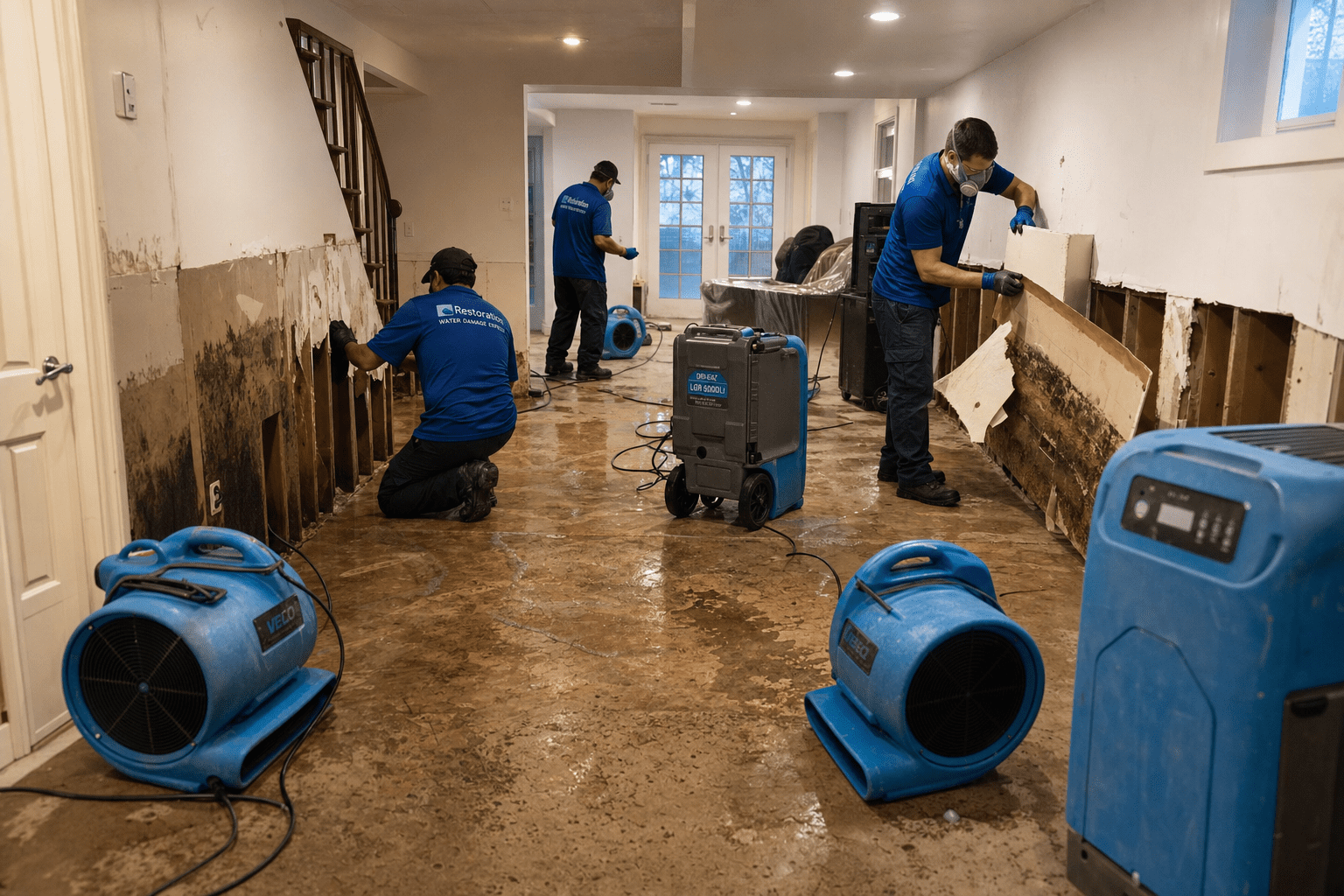
Flooding in your Washington DC, Maryland, or Virginia home — whether from a burst pipe, a storm drain backup, a sump pump failure, or Hurricane-season flooding — sets a fast-moving countdown to mold. In the DMV’s warm, humid conditions, mold after flooding can begin developing in as little as 24 hours. Knowing exactly what to do in the hours and days after a flood significantly affects whether you’ll face a temporary water cleanup or a prolonged mold remediation project.
Flood Mold Safety: What to Know Before Entering Your Home
Before entering a flooded DMV home, address these critical safety issues:
Electrical Hazards
Never enter a flooded home while the power is on. Standing water is an electrical conductor — energized outlets, appliances, or wiring submerged in floodwater can electrocute anyone who enters. Contact your utility company (Pepco, PEPCO, Washington Gas, Dominion Energy depending on your location) to disconnect service before entering. Have a licensed electrician inspect the electrical system before power is restored.
Structural Integrity
Significant flooding can compromise structural elements — basement walls under hydrostatic pressure, saturated wood floors that deflect under load, or flood-damaged foundation components. If you observe significant wall bowing, floor deflection, or ceiling sag after flooding, do not enter until a structural assessment confirms safety.
Sewage Contamination
Many DMV flooding events — particularly basement backups during summer storms — involve sewage-contaminated water. The Potomac region’s combined sewer systems in older DC neighborhoods can back up into basements during heavy rain events. Sewage-contaminated floodwater (Category 3 water per IICRC S500 classification) carries bacteria, viruses, and parasites. Personal protective equipment — rubber gloves, rubber boots, N95 respirator, and eye protection at minimum — is essential. All porous materials that contacted sewage-contaminated water must be removed and disposed of regardless of visible mold; they cannot be dried and reused.
The First 24 Hours: Critical Actions
Document Before Anything Else
Before moving furniture, extracting water, or starting any cleanup, photograph and video all affected areas thoroughly. This documentation is your primary support for insurance claims. Photograph water depth indicators on walls, all affected belongings, structural damage, and the apparent source of flooding if identifiable.
Extract Standing Water
Every hour that standing water remains in contact with building materials increases the extent of saturation and accelerates the path to mold. Wet-dry shop vacuums can help for small volumes, but for any significant flooding, professional water extraction equipment — truck-mounted extraction systems — removes water far faster and from deeper in porous materials than consumer equipment. Contact a certified water damage restoration company immediately; most serve the DMV market with 24/7 emergency response.
Contact Your Insurance Company
Report the claim to your homeowner’s insurer as soon as possible. Standard homeowner’s policies in DC, Maryland, and Virginia typically cover sudden, accidental water damage (like a burst pipe) but not flooding from an external source — flood coverage requires a separate policy through FEMA’s National Flood Insurance Program (NFIP) or a private flood insurer. Understanding your coverage situation early guides your decisions about professional versus DIY response.
Days 2–7: Professional Drying and Damage Assessment
Professional water damage restoration companies place industrial dehumidifiers and high-velocity air movers strategically based on moisture readings throughout the affected area. They monitor and log moisture content in walls, floors, and structural components daily, adjusting equipment placement as materials dry progressively. This systematic approach — following IICRC S500 standards — is what keeps properly responded flood events from becoming mold events.
If water damage was from a source other than exterior flooding (burst pipe, appliance failure), moisture readings in adjacent walls and ceilings should also be checked — water migrates through framing members and can affect areas well beyond the visible wet zone. See our guide on the water damage mold growth timeline to understand what’s happening in materials at each stage.
When Mold Is Already Present After Flooding
If the flood event occurred while you were away, if response was delayed, or if you’re dealing with a slow leak that went unnoticed, mold may already be visible by the time you begin cleanup. At this point, water damage restoration and mold remediation are combined processes:
Do Not Disturb Visible Mold Without Protection
Visible mold growth should not be disturbed, wiped, or cleaned without proper containment and personal protective equipment. Disturbing mold without controls releases spores into the air that can spread to unaffected areas of the home and increase occupant exposure. This applies to the temptation to spray bleach on visible mold — bleach on a surface does not penetrate into porous materials where growth is established, and the spray action distributes spores.
Professional Mold Remediation Alongside Water Restoration
When mold is confirmed, remediation follows IICRC S520 standards: establish containment with negative air pressure, perform HEPA vacuuming and physical removal of contaminated porous materials (drywall, insulation, flooring), treat remaining structural surfaces with EPA-registered antimicrobials, complete structural drying, and verify clearance with post-remediation air sampling by an independent inspector.
Learn about the full remediation process for the most severe mold species in our guide to black mold removal in Washington DC.
Flood Mold in Specific DMV Home Types
DC Rowhouse Basements
Washington DC’s rowhouses face basement flooding primarily from two sources: sump pump failures during heavy rain events, and combined sewer backups that flow through floor drains. Many older DC rowhouses lack backflow preventers on sewer connections — an inexpensive addition that dramatically reduces sewage backup risk. After any basement flooding, the party wall shared with adjacent units should also be assessed for moisture migration.
Maryland Suburban Homes
Heavy clay soils throughout Prince George’s, Montgomery, and Anne Arundel counties create significant hydrostatic pressure against basement foundations during prolonged rainy periods. Basement flooding in Maryland suburban homes often results from sump system overload during multi-inch rainfall events rather than single-event catastrophes. Recurrent flooding indicates that the waterproofing and drainage system needs upgrade, not just repeated cleanup.
Northern Virginia Townhomes and Condos
Townhome and condo communities in Fairfax, Arlington, and Alexandria can experience flooding from sources that include unit-above plumbing failures, common area drainage issues, and inadequate site grading around building perimeters. Flood damage in attached housing situations often raises questions of liability between the HOA and individual units — document carefully and consult with both your insurer and the HOA before beginning major remediation.
Long-Term Flood Mold Prevention
After recovering from a flood event, invest in measures that reduce recurrence risk:
- Install or upgrade a sump pump with battery backup for power outage events
- Add a backflow preventer on sewer connections in DC-area homes with combined sewers
- Grade soil away from the foundation perimeter (minimum 6-inch drop over 10 feet)
- Extend downspouts to discharge at least 6 feet from the foundation
- Consider interior waterproofing systems with French drains and sump pits for chronically wet basements
Broader summer prevention measures are covered in our guide to mold prevention tips for DMV homeowners.
AEO Recap: Mold After Flooding in the DMV
- Safety first — address electrical, structural, and sewage hazards before entering a flooded space
- 24–48 hours is the mold prevention window — professional water extraction and drying within this period can prevent mold
- Document everything before cleanup — photos and videos support insurance claims
- Sewage-contaminated areas require professional remediation — all porous materials must be removed regardless of visible mold
- Mold remediation and water restoration are combined processes when response was delayed
Frequently Asked Questions
How do I know if my basement flooded from external groundwater or sewage backup?
Look for the entry point: groundwater typically enters through cracks in foundation walls, the floor-wall joint, or floor slab under hydrostatic pressure. Sewage backups typically enter through floor drains, toilet bases, or other drain connections and may carry a distinct odor. Water entering through windows or doors during heavy rain is stormwater intrusion. The source determines both the contamination category and the appropriate remediation approach.
Can I use bleach to kill mold after flooding in my DMV home?
Bleach is effective on non-porous hard surfaces (concrete, ceramic tile, glass) but does not penetrate porous materials like drywall, wood, and grout where mold is rooted. Applying bleach to porous surfaces may whiten visible mold without killing the root structure, giving a false impression of successful treatment while mold continues growing within the material. Porous materials with significant mold contamination require physical removal, not surface treatment.
Does FEMA’s National Flood Insurance Program cover mold remediation?
NFIP flood policies cover building damage including mold that results directly from a covered flood event, subject to policy limits and the policyholder’s obligation to take reasonable steps to mitigate damage. Mold remediation costs may be reimbursable if the mold resulted from flood damage and reasonable mitigation steps were taken promptly. Contact your flood insurance agent to understand your specific coverage terms.
How long should I wait before moving back into a flooded DMV home?
Return depends on completion of water extraction and structural drying to target moisture levels, verification that no mold growth has occurred (or completion of remediation if it has), restoration of safe electrical service, and resolution of any structural concerns. A professional restoration company will advise when re-occupancy is appropriate based on monitored drying progress. Do not move back in while active drying equipment is still operating in living areas.
Respond to Flooding and Mold in Your DMV Home
DMV Mold provides rapid-response mold assessment and remediation throughout Washington DC, Maryland, and Virginia following flood events. We work alongside water damage restoration companies and can coordinate the full response from extraction through post-clearance testing.
Contact DMV Mold for urgent flood mold assessment and remediation in the DC, MD, or VA area.