
Summer in the DMV brings heat, humidity, and — for many homeowners in DC, Maryland, and Virginia — mold. The region’s humid subtropical climate means that relative humidity regularly exceeds 70–80% outdoors during June through September. When that humid air enters your home through windows, foundation walls, and a leaky building envelope, it creates the moisture conditions mold thrives on. These mold prevention tips for DC, Maryland, and Virginia homeowners address the most common summer mold triggers with practical, actionable steps you can take now.
Tip 1: Keep Indoor Humidity Below 55%
Mold requires surface moisture or sustained relative humidity above approximately 60% to colonize most building materials. Keeping indoor RH consistently below 55% creates an environment where mold cannot establish itself even if spores are present — which they always are. An inexpensive digital hygrometer at each level of your home tells you whether your humidity control is working.
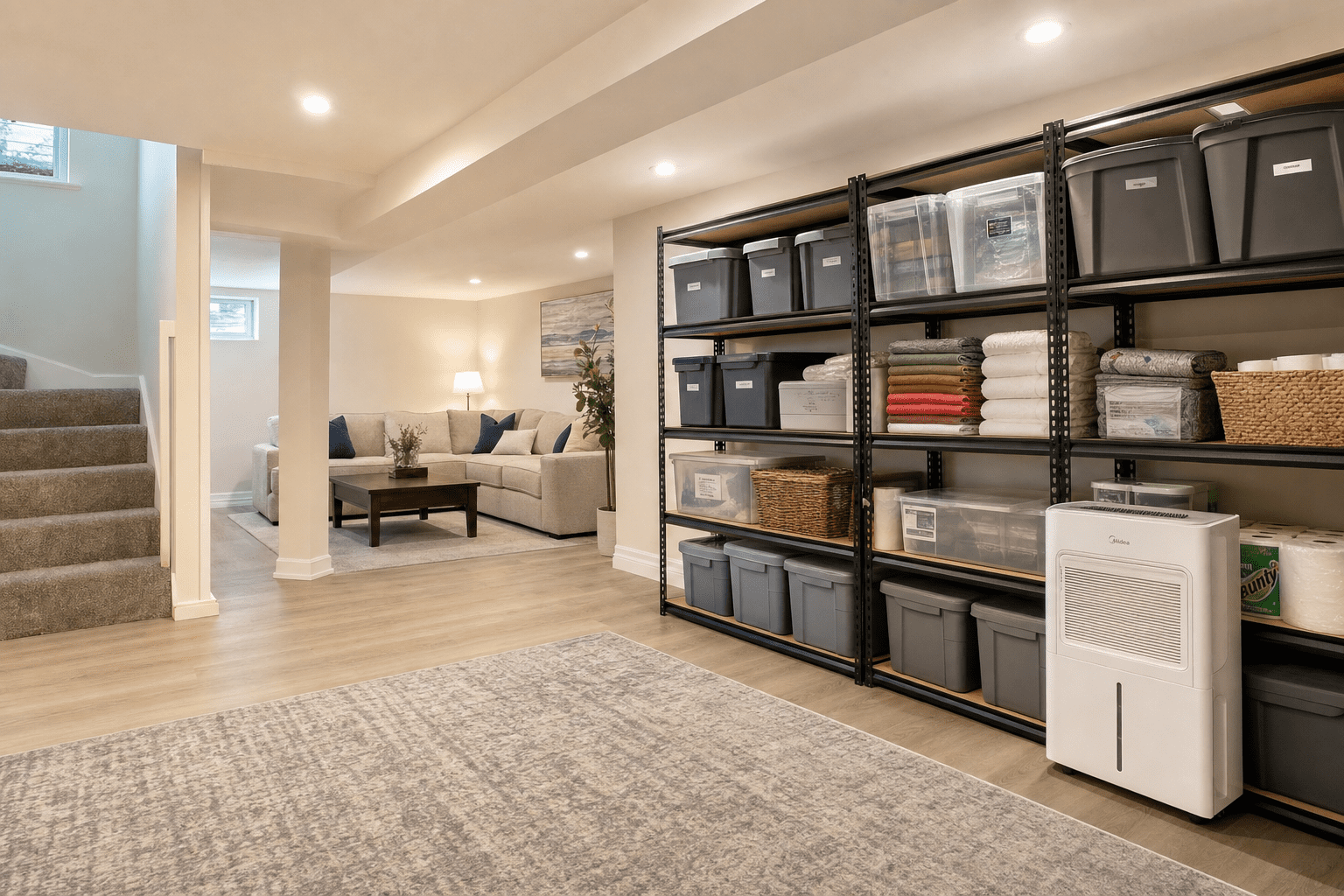
In the DMV, air conditioning alone is often insufficient to maintain 55% RH during the peak humidity weeks of July and August, especially in basement and lower-level spaces. A whole-house dehumidifier installed in line with your HVAC system is the most effective whole-home solution. Portable dehumidifiers work well for targeted areas like basements, but require regular emptying or a permanent condensate drain line to function reliably.
Tip 2: Tune Up Your HVAC Before Summer
Your central air conditioning system is your most powerful humidity control tool — but only when it’s properly maintained. A neglected HVAC system with dirty coils, a clogged drain line, or an undersized capacity for your home’s current layout actually becomes a mold source rather than a mold preventer. Before summer starts:
- Schedule professional HVAC maintenance including evaporator coil inspection and cleaning
- Clear and test the condensate drain line — a clogged line causes pan overflow and water damage
- Change the air filter (and continue monthly changes during heavy summer use)
- Verify that all supply and return registers are open and unobstructed — blocked registers cause pressure imbalances that pull humid air into building cavities
For more on the relationship between HVAC maintenance and mold, see our guide to HVAC mold contamination in DC homes.
Tip 3: Protect Your Basement or Crawl Space
Basements and crawl spaces are ground zero for summer mold in DMV homes. During summer, the temperature differential between cool basement air and warm, humid air that enters through windows, doors, and foundation gaps causes condensation on walls, pipes, and stored items. Combined with hydrostatic moisture migration through concrete and block walls, this creates persistently high moisture conditions.
Key summer basement protection measures include:
- Keep basement windows closed during humid weather — opening basement windows in summer pulls humid outdoor air in, not out
- Run a basement dehumidifier continuously targeting below 55% RH; empty or drain it regularly
- Insulate cold water pipes to prevent condensation from dripping onto surfaces
- Keep stored items off the floor and away from walls — cardboard boxes against concrete walls are ideal mold substrates
For homes with unsealed crawl spaces, a full encapsulation project before summer is the most durable investment — learn about the full process in our guide to crawl space mold remediation in Northern Virginia.
Tip 4: Fix Plumbing Leaks and Water Intrusion Immediately
Any moisture source that goes unaddressed for more than 24–48 hours in summer DMV conditions is likely to produce mold. This applies to slow drips under sinks, leaking toilet supply lines, window frames that weep during rain, and basement walls that seep during heavy storms. Make a habit of checking under-sink cabinets, around appliances, and in utility areas monthly.
When you do discover a leak, the first 24–48 hours are critical — see our detailed breakdown of the water damage mold growth timeline in DMV homes to understand exactly why rapid response matters so much in this climate.
Tip 5: Use Kitchen and Bathroom Exhaust Fans Consistently
Kitchen and bathroom activities generate large volumes of moisture in a short period — a hot shower can add several ounces of water vapor to a small bathroom in ten minutes. If that moisture isn’t exhausted to the exterior, it condenses on cooler surfaces: mirrors, tile grout, ceiling drywall, and the back of the wall cavity behind the fixture wall.
Best practices for exhaust fans in DMV homes:
- Run bathroom exhaust fans during every shower and for at least 15 minutes after finishing
- Run kitchen exhaust fans while cooking and for several minutes after boiling or frying
- Confirm that your exhaust fans actually discharge to the exterior — hold a tissue near the fan grille while running it and verify discharge at the exterior cap
- Replace undersized or non-functional exhaust fans — a fan rated for less than 50 CFM in a modern bathroom is typically inadequate
Tip 6: Inspect and Maintain Your Roof and Gutters
Summer thunderstorms in the DMV can bring intense, localized rainfall that overwhelms clogged gutters, saturates improperly graded soil against foundation walls, and exploits any vulnerability in roof flashing or sealants. Water that enters through the building envelope from above is a direct mold trigger.
Before and during the summer storm season:
- Clean gutters and downspouts in spring and after heavy leaf fall
- Extend downspout extensions at least six feet from the foundation
- Inspect roof flashing around chimneys, skylights, and HVAC penetrations annually
- Check attic sheathing for early signs of moisture staining after major rain events
Attic mold caused by roof leaks or ventilation failures is a common finding in Maryland home inspections — learn more about attic mold removal in Maryland.
Tip 7: Monitor and Respond to Hidden Warning Signs
Many summer mold problems in DMV homes develop in spaces that aren’t checked regularly. Building a simple summer monitoring routine catches problems early:
- Check the basement and any crawl space access points monthly during summer, looking for new staining, efflorescence on walls, or musty odors
- Peek into the attic after major rain events to check for new moisture staining
- Test every bathroom exhaust fan quarterly — hold a tissue at the grille to confirm suction
- Review humidity readings on any room hygrometers weekly and adjust dehumidifier settings as summer heat intensifies
- If household members develop unexplained respiratory symptoms, headaches, or fatigue during summer months, consider a professional mold inspection — symptoms that improve when occupants are away from home often point to indoor air quality issues
AEO Recap: Summer Mold Prevention for DMV Homeowners
- Keep indoor RH below 55% — add supplemental dehumidification to AC during peak summer humidity
- Maintain your HVAC system — a poorly maintained system creates mold instead of preventing it
- Protect basements and crawl spaces — keep windows closed in humid weather and run dehumidifiers continuously
- Fix water intrusion within 24 hours — summer DMV temperatures accelerate the timeline to mold germination
- Use exhaust fans consistently — in kitchen and bathrooms during and after any moisture-generating activity
- Maintain roof drainage — gutters, downspouts, and flashing that fail in summer storms are direct mold entry points
- Build a monthly monitoring routine — early detection prevents small moisture issues from becoming large mold problems
Frequently Asked Questions
What indoor humidity level should I target in my DMV home during summer?
Target 45–55% relative humidity for most DMV homes during summer. Below 30% can cause wood shrinkage, dry skin, and static electricity issues; above 60% supports active mold growth on many materials. Most experts cite 50% as the optimal balance for occupant comfort and mold prevention in humid climates like the DMV.
Is a portable dehumidifier enough for a DMV basement, or do I need a whole-house system?
A properly sized portable dehumidifier can manage humidity in a typical residential basement effectively. However, portable units must be emptied daily during peak summer humidity — a single missed day can result in the reservoir overflowing onto the floor it was meant to protect. A permanent installation with a gravity drain line or condensate pump eliminates this risk. For homes with significant basement moisture issues, a whole-house dehumidifier integrated with the HVAC system provides more consistent control.
Can I prevent mold in a DC condo or apartment?
Condo and apartment tenants have less control over building-level moisture issues — roof, building envelope, and HVAC maintenance are typically the building’s responsibility. Within your unit, run exhaust fans consistently, maintain indoor RH below 55% with a portable dehumidifier or window AC, and report any moisture intrusion through walls or ceilings to building management in writing immediately. For tenant rights in DC rental situations involving mold, see our guide on DC tenant rights and mold in rental property.
Does opening windows help prevent mold in the summer?
In the DMV summer, generally no. When outdoor relative humidity exceeds 65–70% — which is common from June through September — opening windows increases indoor humidity rather than reducing it. The exception is on cool, dry mornings when outdoor dew point is low. As a rule, keep windows and doors closed during the heat of the day in summer and rely on mechanical conditioning.
Protect Your DMV Home from Summer Mold
If you’re seeing early warning signs of mold — musty odors, visible staining, or condensation on walls — don’t wait for the problem to grow. DMV Mold provides certified mold inspections throughout DC, Maryland, and Virginia, with same-week appointments available during summer’s peak mold season.
Contact DMV Mold today for a professional mold assessment or preventive consultation.